The following article is being presented for the reading pleasure of the members of the
Big Woods Hare Hunters of the Allegheny.
The following article was featured in the premier rabbit and hare hunting magazine
THE RABBIT HUNTER
SEPTEMBER 2021 VOLUME 36 NO. 1
HABITAT ON THE ALLEGHENY
Writing and
photography
By
Joe Ewing
High HareMan
Big Woods Hare
Hunters of the Allegheny
Fifty years ago, there seemed
to be a beagle in every Pennsylvanian’s backyard. If you wanted to hunt, you only
had one choice, small game. Rabbit season started in late October and ran until
the Monday after Thanksgiving. The buck season ran for two weeks with the
possibility of a two-day doe season. Then the late rabbit season started back
up.

Today, Pennsylvania whitetail
deer reign as king. The official publication of the PGC, Pennsylvania Game
News, runs deer stories month after month. Deer hunting seasons run four or
more months. Whitetail deer hunting is universally elevated higher than
religion. Schools close and Sunday hunting will require the churches be
shuttered too. Even the Preacher hunts deer on Sunday. Anyone degrading deer or
deer hunting is looked down upon as some kind of nut case. Countless deer
hunters incessantly claim, “there are no deer in Pennsylvania”. Just take a
drive any evening through farm country and you’ll see hundreds of whitetail
deer devouring farmer’s crops. What you won’t see is the subtle damage deer are
doing to our forests.
In a recently published book
titled, IT’S ALL ABOUT HABITAT, Pennsylvania author Joseph Krug, begins
his narrative by saying, “Sometimes, the best wildlife habitat improvement tool
we have (when used legally) is the gun.” Krug is talking about whitetail deer.
He goes on to say, “If you are hesitant to embrace this fact, I suggest you
enjoy the short-term gratification of artificially high deer populations
because the long-term consequences are certain to follow. Trust me –you
won’t like the repercussions, and neither will your children and grandchildren.”
Author, Joe Krug
Award winning conservationist, Joe Krug, has dedicated nearly four decades of his life to better understand and improve the quality of wildlife habitat. Joe served on the board of directors of the Pennsylvania chapter of the National Wild Turkey Federation (NWTF). He holds life memberships in the NWTF, NRA, The Rocky Mountain Elk Foundation and the National Trappers Association. He received local, regional, state and national recognition for his wildlife conservation efforts and has received many awards too numerous to mention here. Krug readily admits, like many of us, “The majority of my training was earned in the proverbial ‘School of Hard Knocks’.” For more than thirty-five years Krug has grown, planted, cared for and experimented with anything that grows. He admits, “This was a better education than anything I would have received in a classroom.” Krug asserts he has spent much of his adult life enhancing wildlife habitat. He has seen his efforts “constantly exposed to the foraging activity of deer” which gave him an incredible educational experience. Krug has a clear understanding of the impact deer have on our forests and the need to control their numbers. |
One of these
repercussions is Chronic Wasting Disease (CWD), a prion disease, which affects deer, elk, reindeer, sika deer and
moose. As of January 2021, CWD in free-ranging deer, elk and moose has been
reported in at least 25 states as well as two provinces in Canada. As of
January 2021, CWD is found in 14 counties in PA and in 339 counties in 25
states in free ranging cervids.
The Big Woods Hare Hunters of
the Allegheny established a habitat and cover project late in 2019. Complete
information on how we launched our project can be found in the pages of the June
2020 issue of THE RABBIT HUNTER.
In the spring and summer of
2020, the hinge-cut trees sprang to life providing immediate summer nesting and
escape cover for the multiplying cottontail rabbit population. During the
winter of ‘20- ‘21 the buildup of snow atop the brush piles offered thermal
cover. In the spring of 2021, the stumps were sending up new shoots making
ultimate overhead cover for the small animals.
 |
| Winter of 2019-2020 |
 |
| September 2020 |
As
promised, we did not cut the many maple saplings, however, during the winter of
2020-2021 the rabbits completely girdled the bark from most. The brush piles our
members built proved impenetrable to the beagles and we hoped to predators as
well. Apparently, whitetail deer and Cottontail rabbits are not fond of Fire Cherry
(Prunus pensylvanica) sometimes called Bird Cherry, Pin Cherry or Red Cherry or black-birch sprouts as no visible signs
of feeding have been observed. This may be the reason these trees grow so
prolifically in this area.
Rabbit Hemorrhagic Disease Virus 2 (RHDV2), a highly
contagious
foreign animal disease, has been detected in wild hares and rabbits in the
United States. It has been identified in wild rabbit populations throughout the
western states. RHDV2 poses a threat to Pennsylvania’s cottontail rabbit and
snowshoe hare populations. RHDV2 has recently been detected in Cobb County,
Georgia and Lake County, Florida in domestic and wild rabbits.
EASTERN COTTONTAIL RABBIT In the ‘80s and ‘90s
“rabbitat” seemed endless. The strip-mines of Western Pennsylvania, stripped
during the ‘50s and ‘60s, were maturing and turning into prime cover and
habitat. We enjoyed the privilege of hunting on a small farm in southern
Clarion County bordered by old strip-mines. It’s here you would find my friend
Andy and I, along with others, on Saturdays for several years. We hunted in the back yard, front yard,
vegetable garden and around the outbuildings until the farm was sold and
stripped for coal.
In the late ‘70s new laws forced
strip-mines to be quickly restored. Strip miners planted thousands if not
millions of evergreen trees. These restored strip-mines became loaded with
rabbits. The earth was so overly compacted from the restoration process there
were no holes so the poor rabbits had to run. If we didn’t come home with the
limit something was terribly wrong. I’ve talked with many rabbit hunters from
our area who hunted with considerable enjoyment and still love to share the
many memories of the “strip-mines”.
As the evergreen trees grew, the
canopy blocked out the sun and the ground underneath became barren and blanketed
with pine needles. The cottontails gradually disappeared. Today, the evergreen
trees have lived their lives and are slowly dying. Ground cover is gradually
being reestablished where the sun can reach the ground even though much of the
undergrowth is profuse with invasive species. Cottontail rabbits are returning.
The National Geographic Website says, “Materials burned in a planned fire include dead grass, fallen tree branches, dead trees, and thick undergrowth. Controlled burns can also reduce insect populations and destroy invasive plants. In addition, fire can be rejuvenating. It returns nutrients to the soil in the ashes of vegetation that could otherwise take years to decompose. And after a fire, the additional sunlight and open space in a forest can help young trees and other plants start to grow.”
Large areas of these former
strip-mines have been converted to PA Game Lands controlled by the PGC. Small
habitat projects have been completed at a slow and occasional pace. The PGC
mows large expanses for food plots for deer. They believe in controlled burning
or prescribed
burning to keep large areas in grassland.
SNOWSHOE HARE-In a recent issue of GAME & FISH EAST
writer Bryce M. Towsley urges hunters, “to hunt for lesser-known species to
make their hunting lives more interesting.” One of the game animals Towsley mentions
is the snowshoe hare. Towsley describes the “varying hare” in great depth.
Towsley describes hare cover in Vermont saying, “hares prefer thick
evergreen forest; they love cedar and balsam, particularly if it is mixed with
some young hardwood growth. Look for them in the mixed alder and evergreen
swamps along beaver bogs and low-lying streams, as well as in the thick
evergreens often found at higher elevation. Any place with in their range that
offers them thick cover to hide, mixed with good food sources, will almost
always hold hare.”
Towsley’s descriptions mirror exactly as I
have depicted hare habitat in Maine and in the Adirondacks of New York State in
articles I’ve written. Cover and habitat as described is seldom found on the
Allegheny High Plateau. The plateau does not have thick evergreen forest, cedar
or balsam. Exceedingly thick cover is not found on the plateau. We do not enjoy
mixed alder and evergreen swamps and few beaver bogs.
The high plateau has young hardwood growth
where the loggers have clear-cut large areas of timber. Where the sunlight
finds the earth great numbers of seedlings spring to life providing overhead
cover and food for the snowshoe hare as well as ruffed grouse and other game
animals. Even in winters with little or no snow cover snowshoe hare survive
with ease in these clear-cuts. Pennsylvania’s snowshoe hare biologists claim
hare require “ten-thousand stems to the acre to survive.”
The
PGC website asserts, “Snowshoes in Pennsylvania inhabit mixed deciduous
forests with conifers and escape cover, such as rhododendron and mountain
laurel. They favor younger brushy areas, those logged or burned seven to 10
years ago. Hares also live-in swamps where cedar, spruce or tamarack grow.
Dense stands of aspen or poplar, interspersed with pines, might support hares.
In Pennsylvania, high country such as ridge tops, mountains, high swamps and
plateaus harbor most hares.
As
do cottontail rabbits, snowshoes move into forestland opened up by fires, high
winds, ice storms and clearcutting. While cottontails build up good populations
in clear-cut areas in one or two years, snowshoes — with a lower reproductive
rate and different food and cover requirements — need up to seven years to take
hold.”
Habitat loss is affecting
every game species from water fowl to the lowly cottontail rabbit, snowshoe
hare and even the fish in our lakes and streams. Invasive plants, invasive
insects and invasive diseases are slowly but surely condemning our forests and
our game animals to irredeemable losses.
Follow us on Facebook @ facebook.com/BigWoodsHareHunters/
and
On our blog @ https://bigwoodsharehuntersoftheallegheny.blogspot.com/
and
@ Snowshoe Hare Hunting or Big
Woods Hare Hunters of the Allegheny
Just “google” us.

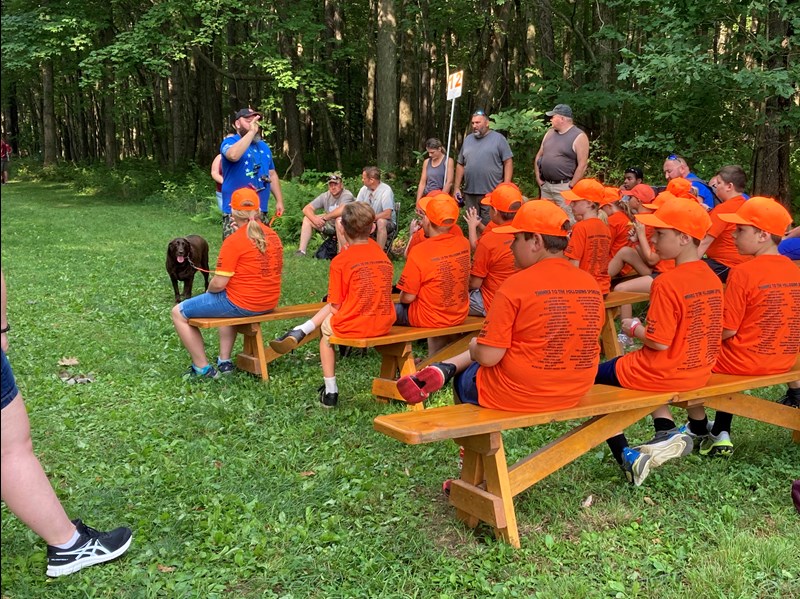
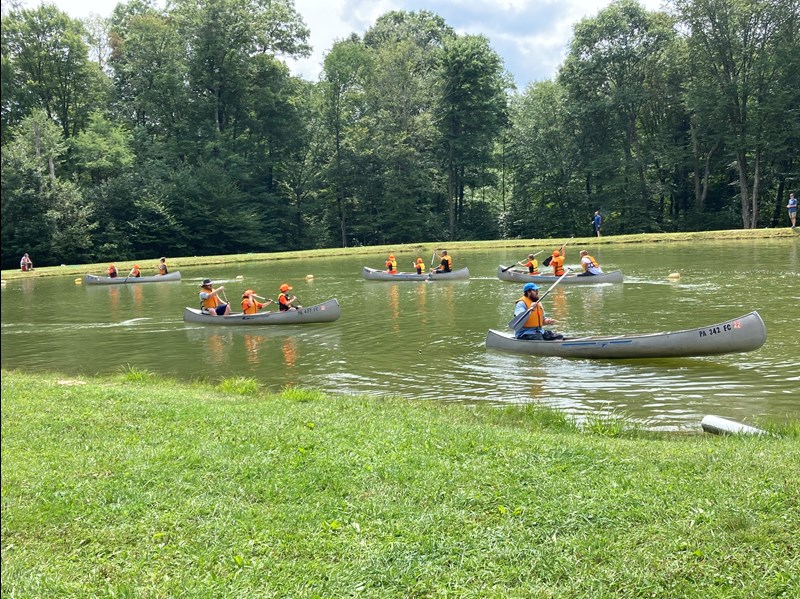
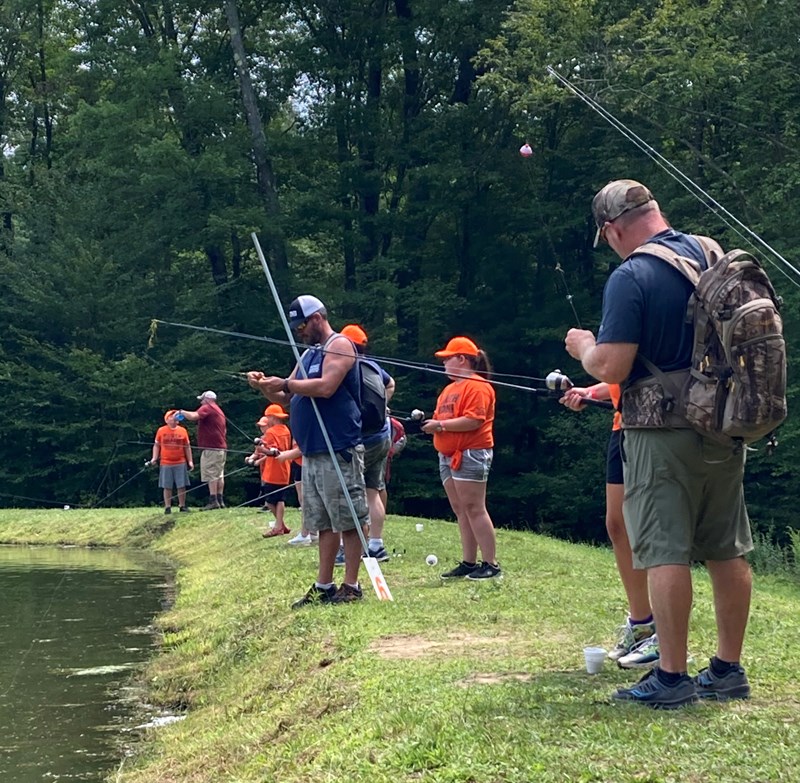
 Clarion County Sportsmen for Youth shall promote the educational and instructional expansion of youth in outdoor activities and the preservation of natural resources. We provide instruction and education in the area of firearms, fishing, hunting and archery and further instill in youth an appreciation of the natural resources of the Commonwealth of Pennsylvania. We currently operate the largest Youth Field Day in the state of Pennsylvania with over 450 kids participating in 15 activity stations, in a one-day event in July, which is held annually.